The Marina Alta is a coastline of cliffs, coves and mountains. In Calp, the apartment towers of the Arenal-Bol and La Fossa stand in contrast to the urbanisations climbing the hills, such as Maryvilla, La Canuta or Ortembach. Benissa has only a short stretch of coast, but it is lined with villas above small coves: La Fustera, Baladrar, Les Bassetes. In Teulada-Moraira, El Portet, Cap Blanc and the Pinar del Abogat are home to whitewashed Mediterranean houses on large plots with pine trees, many of them built in the seventies and eighties by British and German families who are still here.
Further north, El Poble Nou de Benitatxell has spread towards Cumbre del Sol, above the cliffs that drop down to the Cala del Moraig, with very steep plots and rock just below the surface. Xàbia (Jávea) spreads its villas across the Montgó, the Arenal, Cap Martí, El Tosalet and the Portitxol, while Dénia combines the rocky coastline of Les Rotes with the villas of Les Marines, right by the beach and built on sand. Inland, Pedreguer adds quiet urbanisations such as Monte Pedreguer or Monte Solana, where more people live all year round.
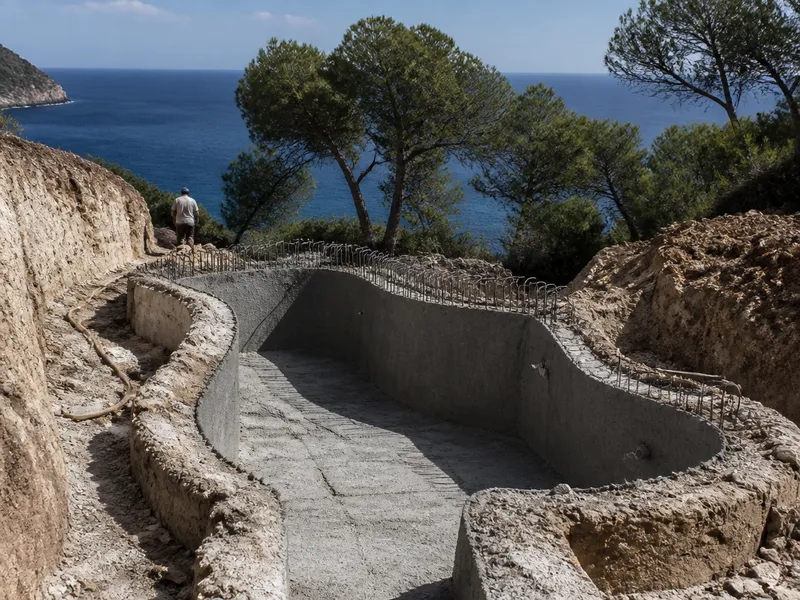
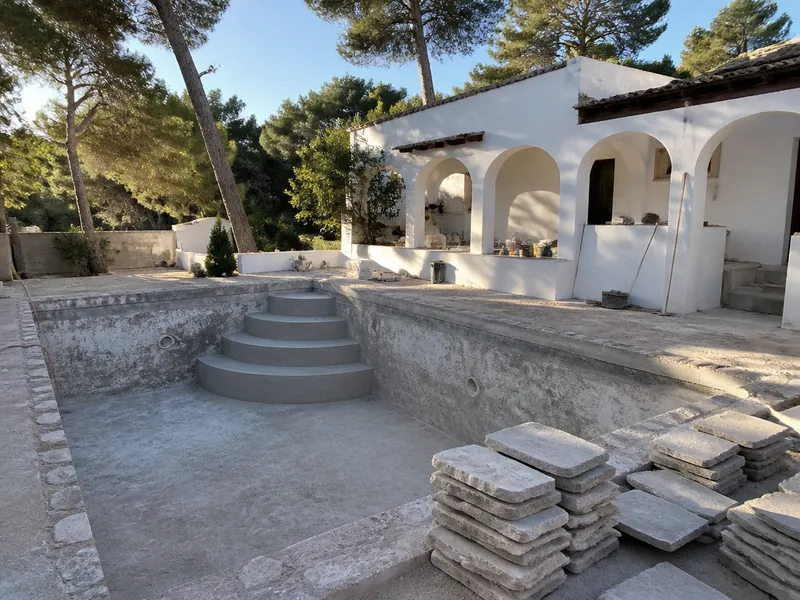
Large villa pools are the norm here, with built-in steps, their original mosaic tiles and plant rooms that have not been updated in decades. The problems are well known: rock that has to be broken out with a hydraulic breaker, access too tight for a concrete mixer, salt spray on the seafront, limescale marking the waterline, pine needles in autumn and gota fría storms that leave the water full of mud. And a very local habit: houses let by the week in summer and shut up in winter, with the owner back in London, Munich or Amsterdam.
The Marina Alta is the furthest point on our rounds from the Pla de la Vallonga, so we group visits by town and on fixed days rather than lose the morning on the road. We have spent 15 years on the Costa Blanca, and we know how these pools were built, what tends to go wrong with them and what is worth keeping when they are renovated.

 Example