Skip to content

Pool painting in Alicante

We paint concrete pools with epoxy or chlorinated rubber paint at villas, communities, hotels and campsites across the province of Alicante. We prepare the shell properly, repair cracks and chips and apply a finish that stands up to the sun, chlorine and heavy summer use.

  • Fixed written quote
  • Reply within 24 hours in season
  • We speak Spanish, English and German

What it involves

Painting a pool is the most affordable way to renovate a concrete shell and the most common approach for community pools, campsites and many older villas. But paint only lasts if the substrate is properly prepared and the right system is chosen: almost every time a pool peels the following year, the fault lies in the preparation, not the paint.

We work with two systems. Two-component epoxy paint forms a hard coat that is highly resistant to abrasion and chemicals, ideal for heavily used pools. Chlorinated rubber paint is easier to apply and recoat, and suits pools that are refreshed often. Before painting, we drain the pool, pressure-wash it, remove loose paint by sanding or blasting, open up the surface, repair cracks and voids in the concrete and apply the primer each system requires.

If you want a finish that does not need renewing so often, we also install mosaic tiles or reinforced PVC liners, each with its own page. And if the water level drops more than it should, we find the leak first: painting over an active crack only hides it for a few weeks.

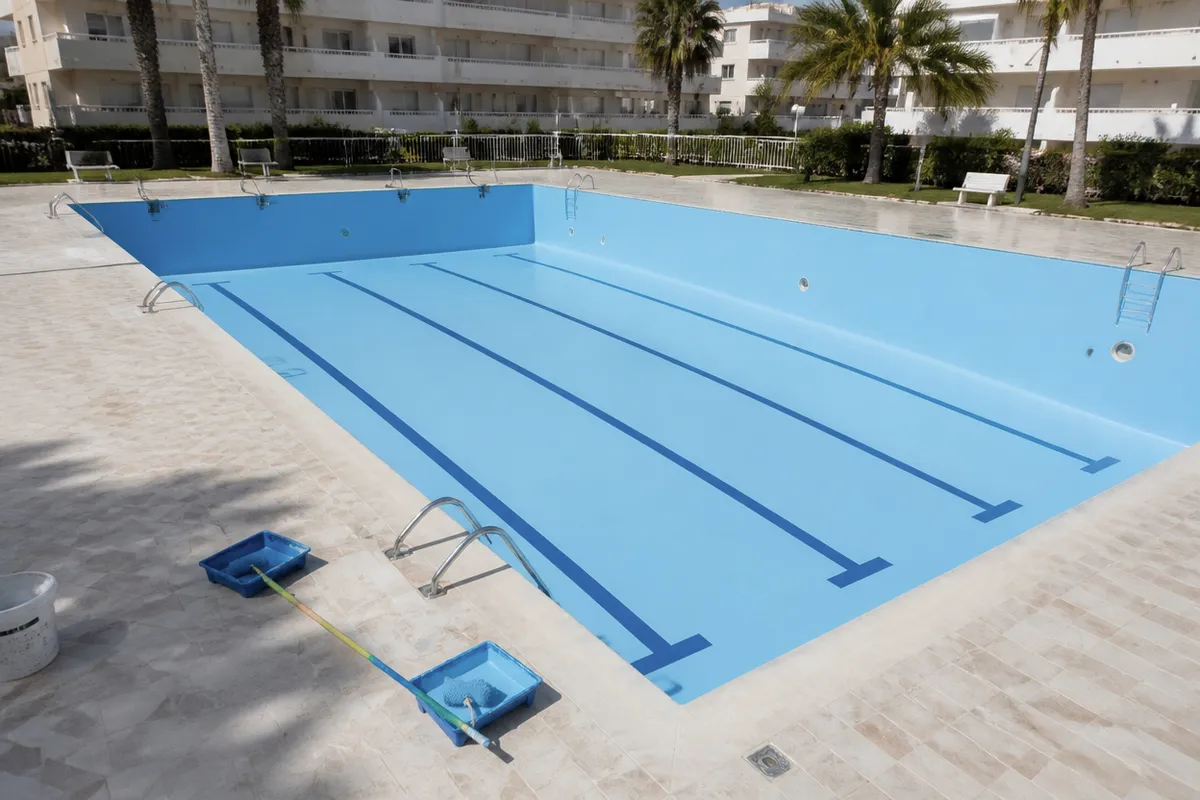
Community pool in Alicante freshly painted in light blue epoxy with dark lane lines

Pool painting: jobs we do

These are the jobs we are asked for most around the province. If yours looks like one of them, call us and we will tell you how we would handle it.

Painting a pool with epoxy paint

Epoxy is the longest-lasting paint for concrete pools. As a two-component product, it cures into a hard, smooth, low-porosity film that resists abrasion from pool cleaners, chlorine, salt water from a salt chlorinator and brushing. It needs a dry substrate with a well-opened surface, so we sand or blast, apply epoxy primer and the finishing coats, respecting the times between coats and the ambient humidity. It is the option we recommend for villas that want to stop painting every season and for heavily used pools.
Chlorinated rubber pool paint

Chlorinated rubber is a single-component, fast-drying paint that is applied by roller and easily recoated over itself. It is less hard than epoxy, but a practical solution for pools that are repainted regularly and for shells already coated in chlorinated rubber. We clean, remove loose areas, repair the substrate and apply the coats needed with the shell thoroughly dry. It cannot be combined with epoxy: we first identify which paint your pool has so we never apply one over an incompatible other.

Painting a community pool before the season opens

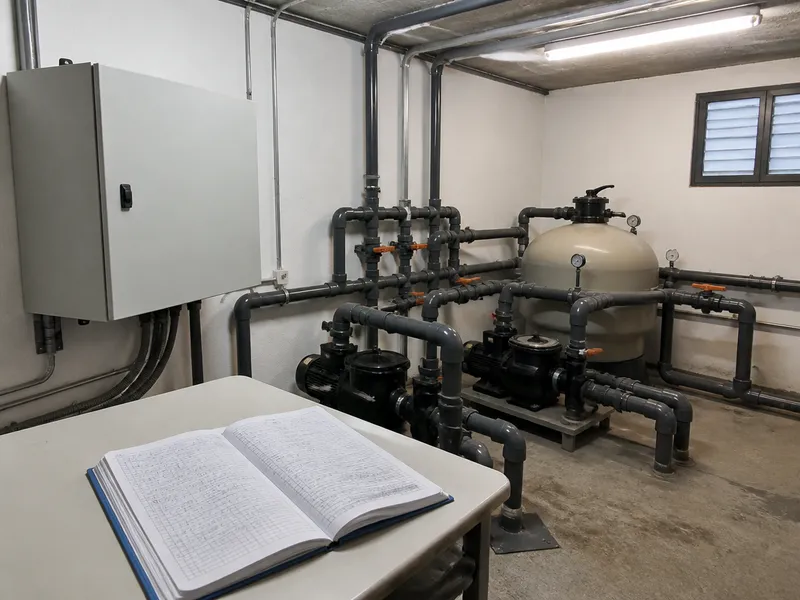
Many owners’ communities paint their pool every spring, and timing is the biggest concern for the property manager: the shell has to be painted, cured and filled before opening day. We schedule the work well in advance, drain, prepare and paint the shell, and hand over a report of what has been done for the pool logbook. We choose light colours that keep the floor clearly visible, something the health regulations for community pools take very seriously, and leave the pool ready to fill.

Preparing a pool for painting: sanding, blasting and cracks

This is the part you do not see, and the part that decides how long the paint lasts. We pressure-wash to remove dirt, limescale and algae, strip any paint that is not well bonded by mechanical sanding or blasting, open up the surface of the concrete so the new coat grips and repair cracks, voids and chips with repair mortars. Then we let the substrate dry for as long as needed, measure its moisture and apply the primer. Skipping any of these steps is the most common reason a freshly painted pool peels.

Pool paint peeling, cracking or blistering

When paint lifts in sheets, cracks or blisters, there is almost always trapped moisture, poor preparation or two incompatible paints behind it. We look for the cause first: we check whether damp is rising from the ground, whether it was painted onto a wet substrate or whether epoxy was mixed with chlorinated rubber. Then we remove everything loose, cut back blisters to a firm base and repaint with the right system. That way the same failure does not happen again next season.

More jobs in this service

  • Painting an old bare concrete pool

    Old concrete pools, with no tiles or paint or with limescale residue, come up very well when painted. We repair the concrete, fill pores and voids, level worn areas and apply primer and epoxy paint to leave a smooth shell that is easy to clean.

  • Painting over pool tiles

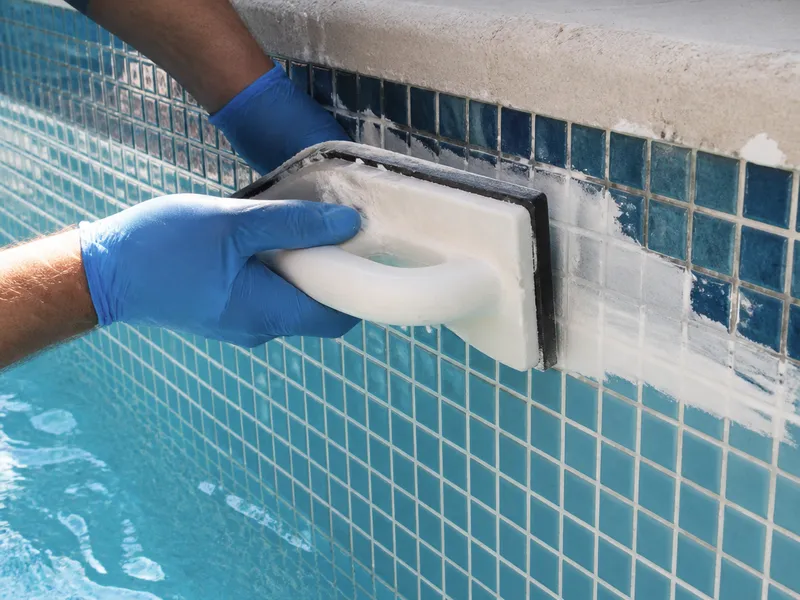
    If the mosaic tiles are firmly bonded but look tired, we paint them with an epoxy system designed for vitrified surfaces. We clean thoroughly, remove limescale, sand the glaze, replace any missing tiles and apply a bonding primer before the topcoat.

  • Switching from chlorinated rubber to epoxy pool paint

    Epoxy will not bond to chlorinated rubber, so changing systems means removing the old paint completely. We do this by blasting, leave the concrete clean with an open surface, carry out repairs and apply the full epoxy system starting with the primer.

  • Removing built-up layers of old pool paint

    Many villa pools have been painted over season after season until the layers start flaking off in sheets. We blast them off down to the concrete, which is left sound and even again, ready for a new, compatible paint system.

  • Pool lane lines and depth markings

    For community, hotel and lap pools, we paint lane lines on the floor, T-marks on the walls and clearly visible depth markings, using paint from the same system as the shell in dark colours that contrast with a light floor.

  • Choosing a pool paint colour: white, blue, sand or grey

    Colour changes how the water looks and also its temperature. Light shades give a bright turquoise and show dirt on the floor straight away; blues give a more classic look; and greys a natural feel that warms the water slightly more.

  • Pool paint leaving a white chalky powder

    That powder is paint degraded by the sun and poorly balanced water, and it mainly appears on old chlorinated rubber. It means the coating has lost its protection. We clean, sand the degraded surface back to a firm base and apply a compatible coat before the concrete is exposed.

  • Rough pool paint where algae cling

    Badly applied or very worn paint leaves a rough surface where algae and dirt cling and brushing is not enough. We sand, repair and paint with a smooth finish that is easy to clean and needs fewer chemicals to stay clean.

  • Painting a paddling pool or children’s pool

    Children’s pools at communities, campsites and hotels get heavy use and get dirty quickly. We paint them with an epoxy system in light colours, paying special attention to edges, steps and drains, and have them ready at the same time as the main pool.

  • Painting hotel and campsite pools in the low season

    At hotels, campsites and holiday apartments on the coast we paint outside the high season, organising the work pool by pool or in phases so there is always a swimming area available if the establishment stays open.

  • Painting a pool that has been empty for a long time

    A shell left empty in the sun for months cracks on the surface, fills with soil and leaves, and the paint crazes. We clean, treat stains and organic residue, repair damaged concrete and paint to bring the pool back into use without the need for a renovation.

  • Painting a newly built concrete pool

    New concrete has to cure completely before it is painted, because the moisture and alkalinity it releases lift the paint. We wait as long as needed, measure the moisture in the substrate, neutralise the surface and apply epoxy primer and topcoat to a firm shell.

  • Painting a pool shell that never quite dries

    On low-lying plots or very close to the sea, ground moisture can rise through the pool walls. We measure the moisture, allow drying time, ventilate and use epoxy primers compatible with damp substrates so the paint does not lift.

What you get with us

  • Preparation first, paint second

    We spend more time cleaning, repairing and opening up the surface than painting, because that preparation decides whether the paint lasts this season and the ones after.

  • The right system for your pool

    We identify the paint already on the pool and choose epoxy or chlorinated rubber based on use, substrate and how often you want to repaint, never mixing incompatible products.

  • Reply within 24 hours in season

    Communities and holiday lets are often in a hurry before opening: in season we reply within 24 hours to agree dates and avoid losing swimming days.

  • Public liability insurance

    We work with public liability insurance, a requirement many property managers and tourist businesses ask for before awarding the job.

How we do it, step by step

  1. Inspection and assessment

    We look at the shell, identify the existing paint, locate loose areas, cracks and damp, and propose the system, the colour and the schedule.

  2. Draining and pressure washing

    We drain the pool, pressure-wash the entire shell and remove limescale, algae and ingrained dirt to see the real condition of the substrate.

  3. Sanding, blasting and repairs

    We remove loose paint, open up the surface, repair cracks and voids, let the substrate dry and measure its moisture before applying the primer.

  4. Primer and paint

    We apply the primer and finishing coats by roller, controlling temperature, humidity and times between coats, and paint lines and markings if you need them.

  5. Curing and filling

    We let the paint cure for as long as the system requires before filling and adjust the water chemistry to protect the finish from day one.

Pool painting in Alicante province

Pool painting carries a lot of weight in the province of Alicante because of the many urbanisations with community pools in Torrevieja, Orihuela Costa, Benidorm or Santa Pola, where the shell is repainted before every opening, and because of the campsites and holiday apartments along the coast. Here the calendar rules: between draining and opening day there is preparation, painting and curing to fit in, and in spring the weather changes quickly.

The climate is both the great enemy of paint and what most shapes the work. Strong sun and long daylight hours degrade the top coats, hard-water limescale clings to porous paints and, near the sea, salt air and overnight humidity leave dew in the shell at dawn. That is why we never paint onto a damp substrate or when rain is forecast, we wait for the sun to dry the dew and we avoid days of humid levante wind or calima, which leaves dust on fresh paint. Inland, by contrast, the gap between cold nights and mild days means adjusting the hours of application.

Where we do it

Swimming pools in Orihuela Costa and Torrevieja

Community pools on bungalow complexes, mini pools in townhouse patios and villas with gardens in Ciudad Quesada and Campoamor. We maintain and repair pools from Guardamar to Pilar de la Horadada, for communities of owners and for owners who spend part of the year in northern Europe.

La Zenia · Playa Flamenca · Cabo Roig · Dehesa de Campoamor

Swimming pools in the Vinalopó and inland Alicante

Inland, summers are scorching, but winters bring frost and the water comes out full of limescale. We build and renovate pools in the Vinalopó, the Foia de Castalla and l'Alcoià with all that in mind: well-protected pools, heating to extend the season and equipment ready for the cold.

Elda · Petrer · Caprala · Loma Badá

Get a quote: pool painting

Fixed written quote and a reply within 24 hours in season. Call us or message us on WhatsApp, in English, Spanish or German.

Frequently asked questions

What people ask us most about pool painting.

Pool painting: your questions

Which pool paint is better: epoxy or chlorinated rubber?

Epoxy is harder, tougher and longer-lasting, and it is the one we recommend for concrete shells in good condition and for anyone who does not want to paint every season. Chlorinated rubber is easier to apply and recoat, and makes sense for pools that already have it or are repainted frequently. The key is not to mix them: if you change systems, the previous paint has to be removed.

How often does a swimming pool need painting?

It depends on the system, how the pool is used and how the water is looked after. Chlorinated rubber needs touching up more often, especially in heavily used community pools in direct sun. A good epoxy system on a well-prepared substrate lasts considerably more seasons. Water with balanced pH and no excess chlorine, and cleaning without harsh products, greatly extend the life of any paint.

Can you paint over old pool paint?

Yes, if the old paint is well bonded and the same type as the new one. We sand to open up the surface, remove loose areas and apply the finish. If there are blisters, flaking sheets, many built-up layers or you want to switch from chlorinated rubber to epoxy, it has to be removed completely by blasting before painting.

How long does a pool have to be empty to paint it?

As long as the substrate needs to dry and the paint needs to cure. A damp shell is the most common reason paint lifts, so we measure moisture before priming and respect the curing times the system specifies before filling. In good weather the process is quick; with rain or high humidity, we wait as long as necessary rather than risk the result.

Does pool paint hold up with a salt water system?

Yes. Both epoxy and chlorinated rubber paints formulated for pools withstand the salt water of a salt chlorinator. What damages paint most is low pH or excess chlorine produced by a badly adjusted unit, which fades it and makes it porous. After painting, it is worth checking the pH control and the output of the chlorinator to protect the finish from the very first fill.

Other services you may need

Community pools

Annual contracts for communities and property managers: pool opening, water testing, logbook, repairs and quotes for the owners' meeting.

See community pools