Skip to content

Pool heat pumps and heating in Alicante

We install inverter heat pumps so you can swim from spring until well into autumn, or all year round. We size them for the volume, how you use the pool and its exposure to wind, and position them so they don't bother you or your neighbours.

  • Fixed written quote
  • Reply within 24 hours in season
  • We speak Spanish, English and German

What it involves

On the Alicante coast warm air arrives before warm water: in April or October it's lovely out on the terrace, but the pool is still too cold for a comfortable swim. A heat pump bridges that gap. It takes heat from the outside air and transfers it to the water through a heat exchanger, using far less electricity than the heat it delivers, especially in the mild coastal climate.

We handle the whole process. We work out the output from the pool volume, the temperature you want, the months you'll use it and how exposed it is to the wind, because an undersized unit never gets there and an oversized one keeps switching on and off. We choose inverter units, which adjust their output and make less noise, connect them to the circuit with a bypass so they don't hold back filtration, and wire them with their own protection devices.

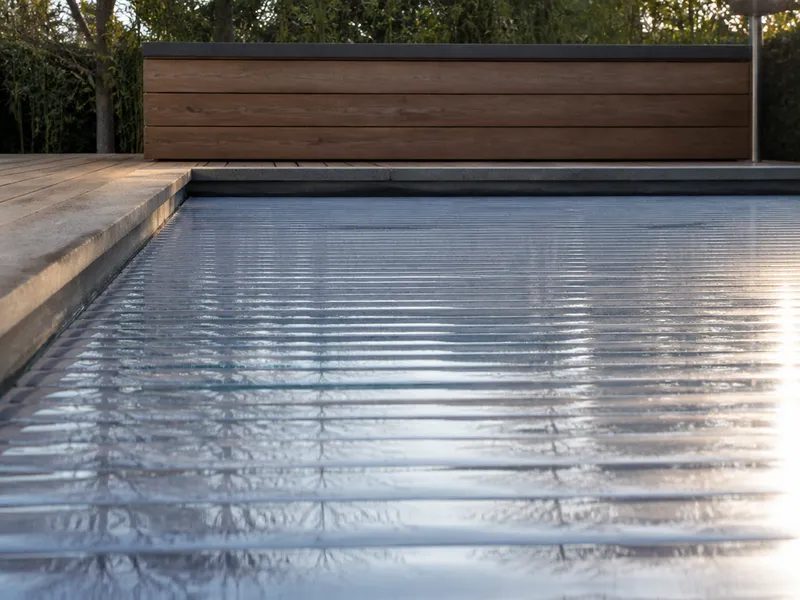
We also fit heat exchangers connected to the home's boiler, air-source heat pump or solar thermal collectors, heat spas built into the pool and complete the installation with a solar cover so you don't lose at night the heat gained during the day. If you're also thinking about a pool cover or enclosure, we'll advise you and handle it through that service.

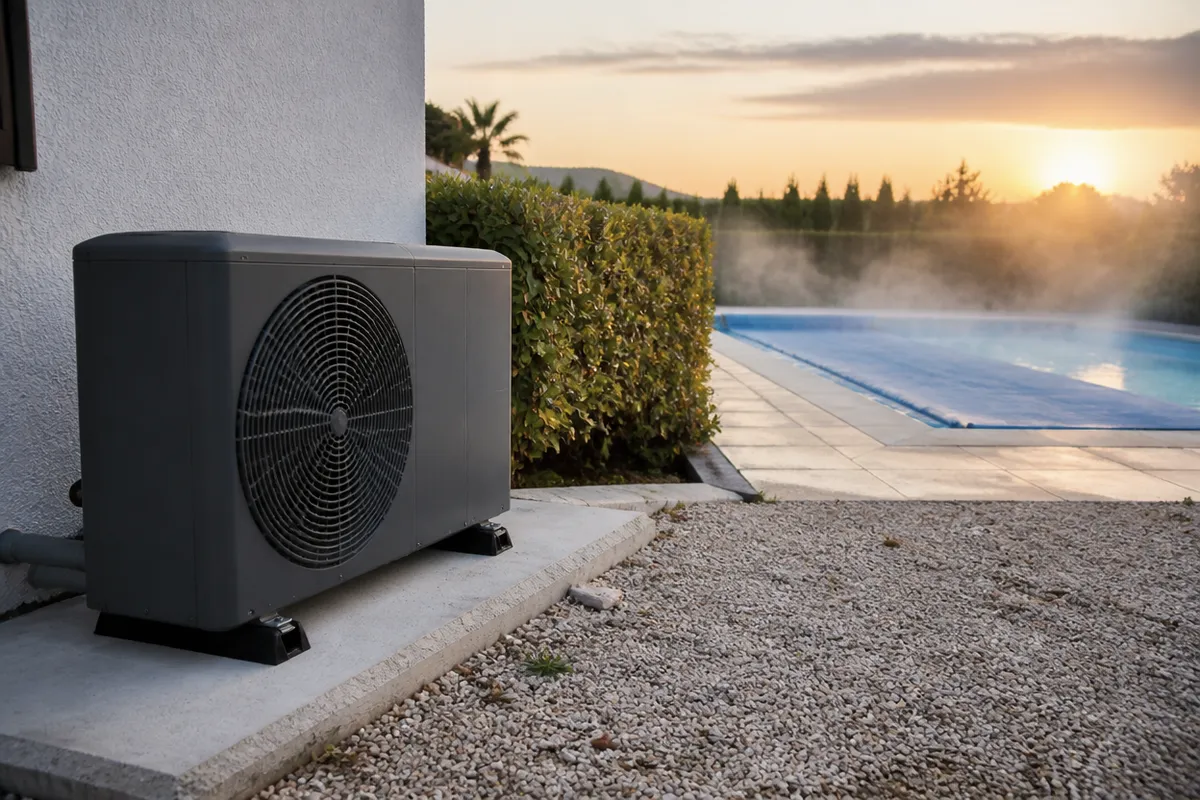
Pool heat pump next to a swimming pool with a solar cover at a villa in Alicante

Pool heat pumps: jobs we do

These are the jobs we are asked for most around the province. If yours looks like one of them, call us and we will tell you how we would handle it.

Pool heating to extend the swimming season

It's what we're asked for most: being able to swim in spring and autumn without shivering. With a properly sized heat pump and a solar cover, a villa pool on the coast stays warm for much of the year, and in midwinter, with a cover and longer running hours, you can keep swimming. We help you decide on the target temperature and the months you'll really use it, because every extra degree and every extra month changes the output needed and the running costs.

Inverter pool heat pump

A conventional heat pump starts at full power, heats and stops, over and over again. An inverter adjusts the compressor and fan to what the water needs: it starts gently, runs at part load most of the time and only uses its full power when the water is very cold or needs heating quickly. The result is lower consumption, less noise and less wear. We install inverter units of different outputs and set them up with operating modes suited to each time of year.

What size heat pump does my pool need?

Output isn't chosen by cubic metres alone. It also depends on the water surface area, the temperature you want, the months of use, whether the pool has a solar cover or enclosure, whether it's exposed to the levante wind or sheltered, and whether you use it daily or only at weekends. We do the calculation with that data and propose the unit that reaches your target temperature without falling short on cool nights or being so oversized that it keeps starting and stopping.

Pool heat pump not heating or showing an error

The most common faults can be fixed: not enough flow because the filter is dirty or the bypass is badly set, a faulty temperature sensor, an evaporator clogged with dust and salt, low refrigerant gas from a small leak or a fan that won't start. We read the error code, measure pressures and the water inlet and outlet temperatures and repair it, or tell you if the unit is worth replacing. Often the problem isn't the heat pump at all, but the filtration feeding it.

Quiet pool heat pump for urbanisations

On an urbanisation plot the heat pump often ends up a few metres from the neighbour's bedroom. We choose low-noise inverter units and place them away from windows and boundary walls, on anti-vibration mounts, with the fan blowing towards the garden rather than the house next door, and programme a quiet night mode. We also advise you on what municipal noise bylaws and your community's rules usually require before you decide where it goes.

More jobs in this service

  • Solar cover to keep the pool heat in at night

    Most heat is lost through the water surface, especially on cool, windy nights. A bubble solar cover on the water greatly reduces that loss and evaporation, so the heat pump runs fewer hours.

  • Pool heat exchanger connected to the house boiler or air-source system

    If your home has a boiler or air-source heat pump with spare capacity, we fit a plate or tube heat exchanger that heats the pool water without mixing circuits, with its own circulation pump, valve and temperature control.

  • Solar pool heating with thermal collectors

    Solar thermal collectors use the province's sunshine to heat the water, either through a heat exchanger or by running the pool water through collectors on the roof of the house. We combine them with the heat pump so it only runs when the sun isn't enough.

  • Heating a spa built into the pool

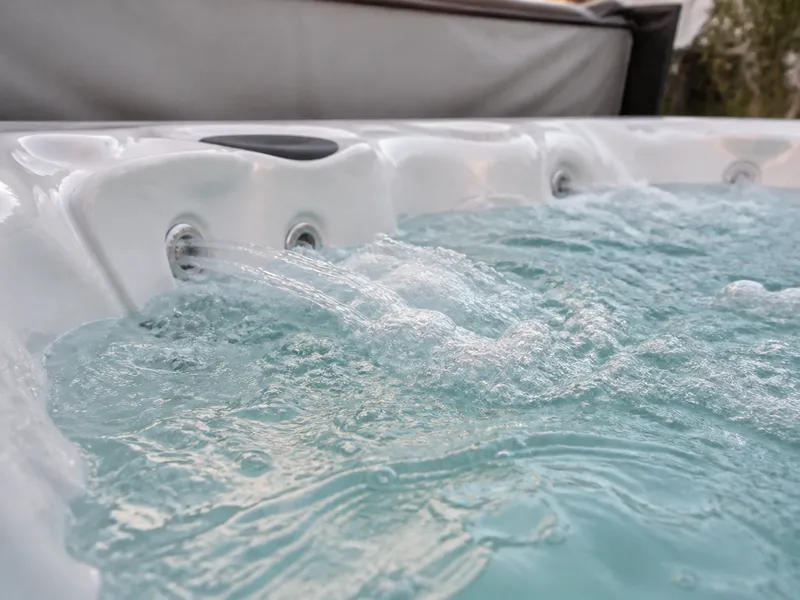
    A built-in spa joined to the pool needs much warmer water than the main pool. We separate it with valves and give it its own heat pump or heat exchanger, so it heats up quickly without warming the whole pool to the same temperature.

  • Heat pump installation with a bypass so filtration isn't restricted

    The heat pump always goes after the filter and before the salt chlorinator or chemical dosing. We connect it with a three-valve bypass that regulates the flow through it, so it heats well without taking flow from the filtration and can be isolated in winter.

  • Heat pump for a salt water pool

    With a salt chlorinator the heat exchanger must be titanium, which withstands salt water and chlorine. We check the unit has one, that the cell sits after the heat pump and that the water chemistry won't attack the exchanger over time.

  • Pool heat pumps inland: frost and defrosting

    In Villena, Alcoy or Castalla winter nights drop below zero and the evaporator ices up. We choose units with automatic defrost and a low-temperature operating range, place them somewhere sheltered and drain the circuit if they'll be off in midwinter.

  • Pool heat pump with solar PV panels

    If you have solar PV panels, we programme the heat pump and filtration for the middle of the day so they use the energy you generate. In Alicante, with so many hours of sunshine, much of the heating can come from your own roof.

  • Heat the pool before you arrive on holiday

    If you have a house on the coast and come for a few weeks at a time, we set up the heat pump with remote control so you can turn it on from home a few days before you arrive. When you open the door, the water is already warm and you don't waste half your stay waiting.

  • Pool heat pump evaporator cleaning: salt air, dust and calima

    The evaporator's finned coil fills with dust, pollen, Saharan calima dust and salt, and the unit loses efficiency. We clean it with suitable products, check the condensate drain, fan and connections, and make sure the water's temperature rise is correct.

  • Replacing an old pool heat pump with an inverter model

    Older fixed-speed units use more power, make more noise and sometimes run on refrigerant gases that have been phased out, which makes repairs more expensive. We remove the old unit, reuse the connection and bypass if they're in good order and fit an inverter of the right output.

  • Cooling pool water in August

    In small or very sunny pools, the water can climb above thirty degrees in high summer and stop being refreshing. Reversible heat pumps can also cool: we install units with a cooling mode to bring the water down a few degrees in the hottest weeks.

  • Warm pool water for daily swimming or rehabilitation

    If you swim every day, exercise in the water or need warm water for health reasons, the pool has to stay at a stable temperature, not just warm up at weekends. We size the unit to hold the temperature every day, with a solar cover and night-time programming.

What you get with us

  • Output calculated, not picked from a catalogue

    We start from the volume, water surface, wind and your months of use so the unit reaches the temperature you want without using more energy than it needs.

  • Fixed written quote

    It covers the unit, the plumbing connection, the electrical supply and commissioning, with no items appearing later and no extras when the installation is finished.

  • Designed to keep the peace with the neighbours

    We choose the location, mounts and night mode so the heat pump doesn't become a problem with the plot next door or with your community.

  • We explain it in your language

    We explain the installation, how to use the unit and its programming in English or German too, so you can change the temperature without relying on anyone.

How we do it, step by step

  1. Site visit and measurements

    We measure the pool, look at orientation, wind and shade, the plant room and the electrical capacity available, and talk about the temperature and months you want.

  2. Calculation and proposal

    We work out the output needed and propose the unit, its location and extras such as a solar cover, with a clearly explained estimate of energy use.

  3. Plumbing and electrical installation

    We place the unit on anti-vibration mounts, connect it with a bypass after the filter and run its electrical supply with separate protection devices in the panel.

  4. Start-up and programming

    We set the flow, check the temperature rise and programme the temperature, schedule and quiet mode, coordinated with the pump's filtration schedule.

  5. Seasonal service check

    Before autumn we clean the evaporator, check pressures and settings and, if you're switching it off, leave the unit drained and protected for the winter.

Pool heat pumps in Alicante province

The province of Alicante is a very rewarding place to heat a pool with a heat pump. On the coast, from l'Alacantí to the Marina Alta and the Vega Baja, winters are mild and the air rarely gets cold enough for the unit to lose efficiency, so a little energy buys a lot of extra season. The strong sun also means the heating can be backed up with solar PV panels or thermal collectors. What cools the water most here isn't the cold but the levante wind and clear nights, which is why we insist so much on a solar cover.

The type of owner matters too. Many British, German and Scandinavian residents in Jávea, Altea, Calpe or Orihuela Costa spend the winter here and want to swim in January; others come for a few weeks and want to find the water warm when they arrive. On urbanisations with small plots, like so many on the coast, noise drives the choice of unit and where it goes. And inland, in Villena, Alcoy or Ibi, frost means choosing units with good defrosting.

Where we do it

Swimming pools in Benidorm, Altea and the Marina Baixa

Hotel and holiday-apartment pools in Benidorm, hillside villas in Altea and Finestrat, and homes among the pines in La Nucía and Polop. We look after your pool even if you spend half the year away, and we build infinity pools wherever the terrain gets tricky.

Benidorm · Rincón de Loix · Altea · Altea Hills

Swimming pools in the Vinalopó and inland Alicante

Inland, summers are scorching, but winters bring frost and the water comes out full of limescale. We build and renovate pools in the Vinalopó, the Foia de Castalla and l'Alcoià with all that in mind: well-protected pools, heating to extend the season and equipment ready for the cold.

Elda · Petrer · Caprala · Loma Badá

Get a quote: pool heat pumps

Fixed written quote and a reply within 24 hours in season. Call us or message us on WhatsApp, in English, Spanish or German.

Frequently asked questions

What people ask us most about pool heat pumps.

Pool heat pumps: your questions

How late in the year can I swim with a pool heat pump in Alicante?

On the coast, with a properly sized heat pump and a solar cover, you can normally swim comfortably from spring until well into autumn. To swim in midwinter as well you need more output and, above all, to cover the pool so the heat isn't lost overnight. Inland, where it freezes, the usable season without a cover is somewhat shorter.

How much electricity does a pool heat pump use?

It depends on the output, the temperature you want, the wind and whether you cover the pool. A heat pump delivers several times as much energy to the water as the electricity it consumes, and in the mild coastal climate that efficiency is high. An inverter unit, a solar cover and running it during sunny hours, better still with solar PV panels, are the three keys to keeping consumption reasonable.

Is a pool heat pump noisy?

Today's inverter units are fairly quiet, especially at part load, which is most of the time. Annoying noise usually comes from poor positioning: right against a boundary wall, on a slab that transmits vibration or with the fan facing the neighbour's house. That's why we choose the spot carefully, use anti-vibration mounts and programme a quiet night mode.

Where should a pool heat pump be installed?

Always outdoors, because it needs to move a lot of air, with clear space in front of the fan and behind the coil. Ideally it goes near the plant room so the pipe runs are short, on a firm, level base, away from bedroom windows and boundary walls. It shouldn't be put in a closed housing or hidden behind dense hedges, because it recirculates its own cold air and loses efficiency.

Do I need to change anything on my pool pump and filter to add a heat pump?

Usually not, but we check that the pool pump delivers the minimum flow the unit requires and that the filter is in good condition, because low flow causes errors. We connect it with a bypass after the filter and, if the panel has no room, add protection devices. If the pump is old or the filter is in poor shape, we sort it out through our filtration equipment service.

Other services you may need